Student journalism is often described as the voice of the school, but whose voice is it, really? At first glance, our school newspaper, the Broadside, appears to represent the student body. It covers sports wins, theater productions, academic achievements, student opinions, and even major news events. But a closer look reveals a deeper issue: that not all students have equal access to participate in creating those stories.
This issue became more visible during “J Week” (Journalism Week), an advocacy campaign led by NYC Youth Journalism Coalition and Press Pass NYC. These organizations work to support and expand student journalism programs across New York City, particularly in public schools that lack resources. During J Week, students and educators organized rallies, workshops, and a citywide petition calling for increased funding and support. A key goal of the petition was to ensure that every public school in NYC has access to a student newspaper or media program, along with proper funding and faculty support. The campaign highlighted a reality that often goes unnoticed: many students across the city don’t even have the opportunity to join a school newspaper.
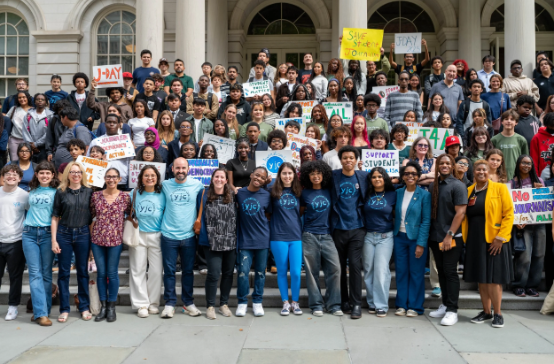
However, even in schools where student journalism exists, obstacles still remain. One of the biggest is time. Writing, editing, interviewing, and meeting deadlines requires a significant commitment outside of regular classwork. For students balancing homework, extracurriculars, and jobs, joining the newspaper can feel unrealistic. One student at BHSECQ noted that while they like to read the newspaper, “it feels intimidating to join if you’re not already confident in your writing.” When participation depends on having free time, it naturally favors students with more flexibility. If student journalism is meant to reflect the whole school, it must be designed with different learning styles and needs in mind. Another issue is awareness. Many students simply don’t know how to get involved and newspaper programs often assume students will just seek them out. As a result, participation can become limited to a small group. The “J Week” petition helped to expand this conversation beyond a single school, and it showed that many students want change to happen.
There is also a broader issue that affects student journalism nationwide: censorship. In some states, “anti-censorship” or “New Voices” laws protect student journalists’ rights to publish stories without undue interference from school administrations. These laws recognize student journalism as a form of free expression and aim to prevent schools from blocking stories simply because they are controversial or critical.
Small steps could make a meaningful difference. Schools could offer more flexible ways to participate, such as open submissions or part-time roles. On a larger scale, expanding journalism programs across NYC public schools would give more students the chance to develop their voices. Ultimately, student journalism has the potential to be one of the most powerful platforms in a school. It informs, connects, and represents the student body. But to truly live up to that role, it has to be accessible to all students, not just in certain schools, and not just for those who already have the time or resources to participate. If the goal is to tell the story of students, then every student should have the chance to help write it.