In the wealthy landscape of New York City, the gap between the penthouse and the pavement has never felt wider. However, the first 100 days of the Mamdani administration have signaled a massive shift in how the city intends to close the gap. From taxing empty luxury condos to opening the doors to the city’s first municipal grocery store, the “Mamdani Mandate” is attempting to rewrite the social and economical contract of New York.
On April 15, 2026, Mayor Zohran Mamdani and Governor Kathy Hochul announced a historic victory for progressive policy, the state’s first Pied-à-Terre tax. It targets luxury secondary residences valued above $5 million, properties often used by global elites as “wealth storage” rather than actual homes. Projected to generate $500 million annually, the tax is a direct response to the “Tax the Rich” chants that defined Mamdani’s 2025 campaign. As Governor Kathy Hochul noted in a press release on her official website that, “if you can afford a $5 million second home that sits empty most of the year, you can afford to contribute like every other New Yorker.”
When asked about what they think about $5 million second homes being taxed, a working class citizen said that “the current tax code disproportionately favors the affluent, and enacting the policies that help level the economic playing field is a necessary and overdue correction.” Many surveyed working class citizens gave similar responses, showing that many New York citizens agree with Mayor Mamdani on his decision on taxing the rich. This is not all people have to say about money. There are many discussions on where the money will actually go, now that the 1% has been taxed. When asked where they would choose the “Pied-à-Terre” tax money could go first – cleaning the streets or lowering grocery prices – one citizen said they would choose “subsidizing the cost of essential groceries,” because “mitigating the economic desperation that often drives survival-based crime addresses the root causes of instability, ultimately fostering safer and more resilient communities.”
That tax revenue is already being funneled into the streets… literally. Commissioner Gregory Anderson of the DSNY (New York City Department of Sanitation) recently announced that six new community districts will achieve 100% trash containerization by the end of 2027. This includes neighborhoods like Sunnyside, Queens and the North shore of Staten Island. By utilizing the “Empire Bins” and automated side loading trucks, the city plans to have all residential trash off the sidewalks by 2031. The goal is simple: get rid of the food source for rats and return the sidewalks to the people.
Perhaps the most experimental pillar of this administration is the plan for municipal grocery stores. The first location is set to open at La Marqueta in East Harlem in 2027. With a $30 million budget, this city owned supermarket aims to cut the record high grocery prices that have plagued New Yorkers since the 2020 pandemic. Unlike private chains, these stores will prioritize union standards for staff and stock products based on community cultural needs rather than profit margins.
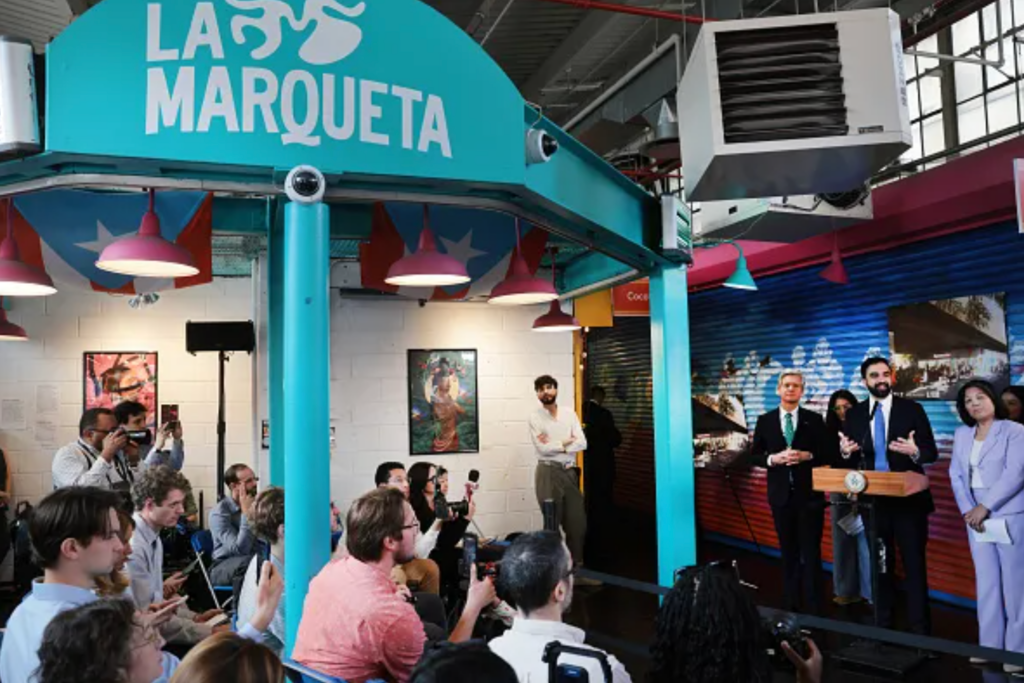
Critics, however, worry about the impact on local bodegas. The New York Post reports that many small business owners feel the city is overstepping, with some owners stating that “it’s not fair for the city to compete with us,” and arguing that “[they’ve] been here for the community through everything… now the city wants to put [them] out of business.” Radhames Rodrigues, head of United Bodegas of America, expressed deep concern to the Post, noting that “a city-run store with taxpayer subsidies is something no small business can fight against.”
As we look toward 2027, the vision for New York is becoming clearer, a city where the super wealthy fund the basic dignity of clean streets and affordable food. Whether this “grand experiment” can withstand the pressures of the global economy remains to be seen, but for now, the Mamdani administration is trying to do the best they can. Hopefully this will be in the best ways that will substantially benefit New Yorkers, regarding cleanliness, affordability of food, and putting money where it is most beneficial.